Introducing Garry Kasparov
Last year I lost to Garry Kasparov at chess. This year I introduced him on stage in Antwerp, with thoughts on AI, Open Source, and freedom.
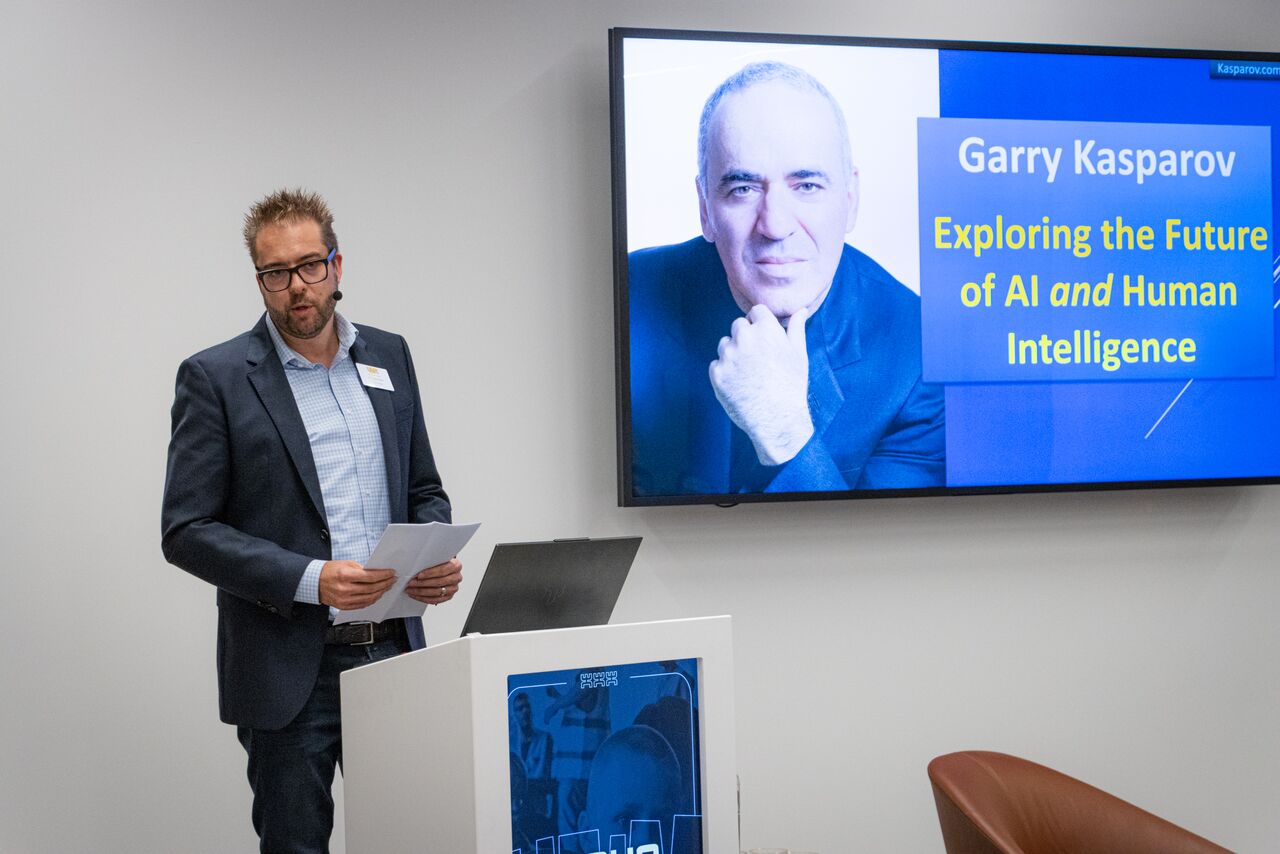
Yesterday evening, I had the pleasure of introducing Garry Kasparov in Antwerp, ahead of his talk on AI and human intelligence.
Last year, I got to play chess against him. This time, I got to tell a room full of people why I admire him.
It was a memorable evening for me, and I wanted to capture it here by sharing my speech.
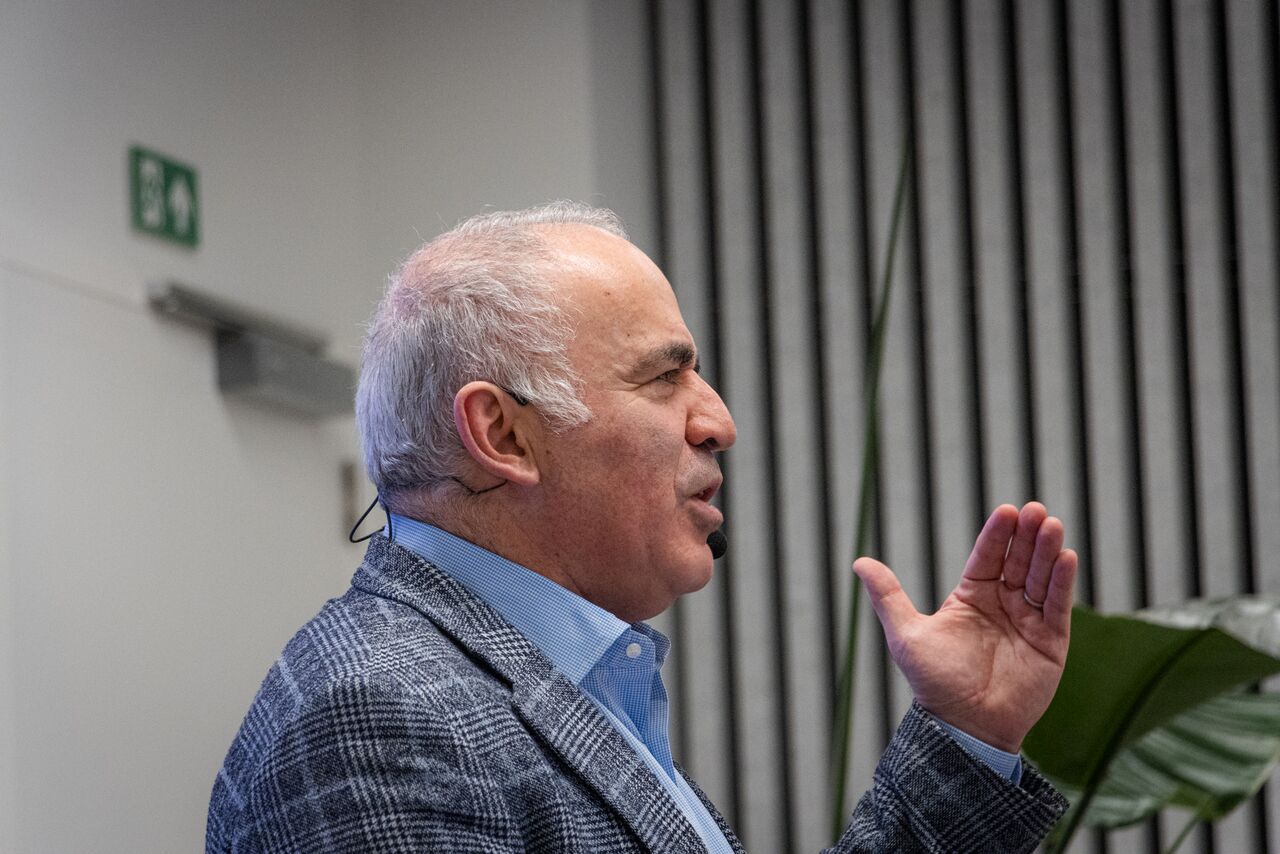
Good evening, everyone.
I'm Dries Buytaert, a Belgian technologist. I created Drupal, Open Source software for building websites.
I've been asked to introduce Garry Kasparov and share some of my own thoughts on AI along the way.
Think of me as the warm-up act.
As I was preparing for tonight, I realized Garry and I have something in common. We both had a big year at the age of twenty-two. I released the first version of Drupal. And Garry became world chess champion.
My launch attracted slightly less attention.
At the time, Garry was the youngest world chess champion ever. And he spent about twenty years as the world's number one.
Last year, thanks to Inge Geerdens and Your Next Move, I got to play Garry myself. That was a dream come true. For me, he's the greatest chess player of all time.
He was playing against twenty of us at the same time. I knew I was going to lose. The only question was in how many moves. Garry won all twenty games, and I lasted twenty-five moves.
He might not remember our game, but I'll remember it for the rest of my life.
I played the Caro-Kann Advance Variation and was out of book after six moves.
Long before our game, Garry's games against a computer made headlines around the world. In 1996, Garry beat IBM's Deep Blue. But a year later, Deep Blue won the rematch.
For the first time in history, a computer, equipped with AI, had beaten the world chess champion in a full match.
Some people make history by being the first to climb Mount Everest. Others, by being the first to walk on the moon.
Garry made history nearly thirty years ago ... as the first knowledge worker to lose his job to AI.
Garry, on behalf of everyone in this room ... thank you for going first.
A quick show of hands: who here has wondered, "What does AI mean for my job?".
What I really admire is what Garry did after his loss to Deep Blue. He immediately turned around, embraced AI, and explored how it could make him a better player. That takes an open mind, confidence and curiosity.
Today, it's our turn to rethink how we work and learn with AI. AI is changing how we compete, and what it takes to stay ahead.
If you run a business, you know how quickly competitors can learn from your success. In top-level chess, your games are recorded and stored in a public database. Your competitors can study them, move by move.
Garry had to keep improving while his competitors were learning from him. And when he retired from professional chess in 2005, he was still number one.
With Drupal, we compete in the open, too. Drupal has powered millions of websites around the world. Drupal is Open Source, which means anyone can use it for free, study the code, copy it, and change it. All for free.
It democratizes access to technology. And it gives people more digital sovereignty: more control over the tools they depend on.
But it also means our competitors can start with the same code. We even give them the installation instructions and the manual.
When Garry and I played last year, we started with the same chess pieces. In exactly the same positions.
It turns out that is not enough to win.
Not for me. And not for the other nineteen players he beat.
Having the same tools doesn't mean you get the same results. And that is true in business, too.
Your competitors have access to the same AI tools you do. What matters is the expertise and judgment you bring, and how well you understand your customers.
And our choices about AI matter beyond business, too. AI is changing geopolitics. It's changing who holds power.
We've all seen those photographs of world leaders meeting the heads of technology companies. Those companies are now helping to shape national security, energy, and the economy. With that influence come questions about how we protect freedom and democracy.
For me, technology is at its best when it gives people more opportunity and more control over their own lives. That's what motivates me in Open Source. And it's what excites me about AI.
It's also why I value Garry's perspective.
Garry earned the world's attention through chess, then used his voice to stand up for the freedom of others, including the people of Ukraine.
For twelve years, Garry chaired the Human Rights Foundation. Today, he is the founder and chairman of the Renew Democracy Initiative.
For more than twenty years, he has stood up to Vladimir Putin and fought for a free and democratic Russia. He even tried to run for president.
Last year, some of us had dinner with Garry. Someone asked him what he still wanted to achieve in his life.
His answer has stayed with me.
He said he wanted to be able to visit his mother's grave in Russia.
Because of his opposition to Putin, he cannot safely return.
For Garry, freedom is deeply personal.
That combination of curiosity about technology and commitment to people is why I'm so glad he's here to talk about the future of AI.
Please join me in welcoming the thirteenth world chess champion, author, and advocate for freedom and democracy ...
Garry Kasparov.
Join 5,000+ readers. I'm the founder of Drupal and co-founder of Acquia. I write about Open Source, AI, and the future of the web, with a focus on building, scaling, and thinking long-term.